
What Group Therapy Actually Is
Group therapy is a form of psychotherapy in which several people meet with a trained mental health professional to work on shared concerns, develop skills, and discuss experiences in a structured setting. Groups may focus on concerns such as substance use, anxiety, depression, trauma, relationships, or other areas connected to treatment. The American Psychological Association (APA) explains that one or more mental health professionals lead these sessions and may focus on certain concerns or broader interpersonal and emotional challenges.
Clinician-led groups differ from casual conversation. Here, a clinician guides the group, helps everyone work toward their goals, and keeps the session on track.
Group Therapy vs. a Support Group
Group therapy and support groups can both provide connection with other people, but they serve different purposes. Support groups generally center on mutual experiences, shared encouragement, and peer support. Depending on the group, they may be peer-led or facilitated by someone else.
Group counseling is a clinical service led by a qualified mental health professional and organized around therapeutic goals. Sessions may involve developing coping skills, exploring patterns in thoughts or behaviors, practicing communication, or working through other treatment-related concerns.
Both can play an important role. When you need professional care, group counseling offers support that goes beyond what a peer group can provide.
How Group Counseling Sessions Are Structured
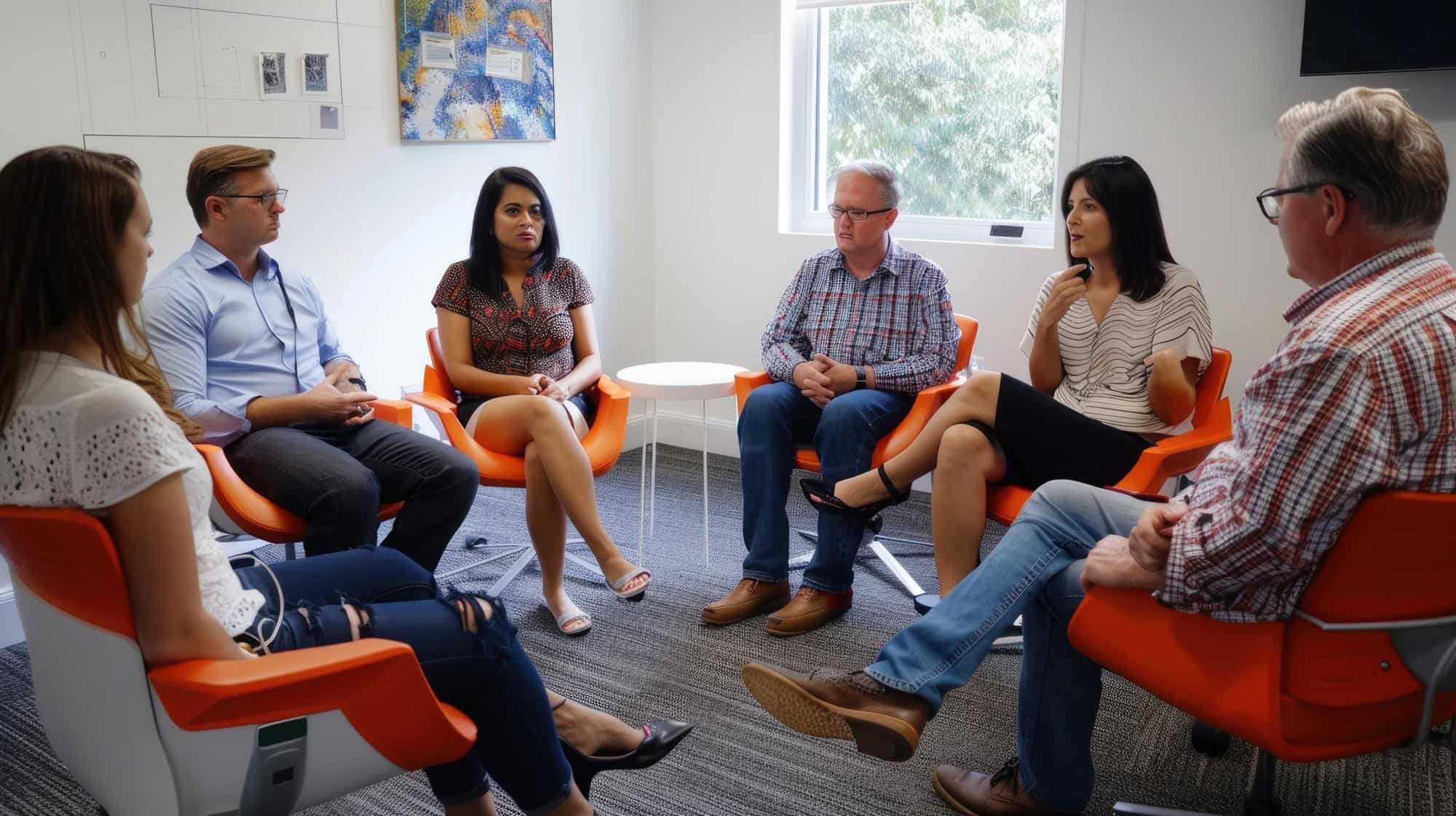
Each session follows a structure set by the clinician, but the details depend on the group’s focus and your treatment goals. Some sessions might center on learning a new skill, talking through a shared concern, practicing coping strategies, or working through experiences together.
Types of Groups You Might Join
Not every group serves the same purpose. Depending on your treatment needs and the options available within your program, you may participate in different types of groups, including:
- Process groups: Provide space to discuss experiences, emotions, relationships, or patterns, with a clinician leading the conversation.
- Psychoeducational groups: Focus on learning about topics related to mental health or substance use, such as symptoms, triggers, coping strategies, or relapse prevention.
- Skills-based groups: Give you opportunities to learn and practice specific skills, such as communication, emotion regulation, distress tolerance, or managing cravings.
Your care team will recommend the types of groups that fit your needs and goals.
The Clinician’s Role in Group Sessions
The clinician guides discussions, introduces treatment-related skills or topics, and helps participants handle difficult conversations productively. They also establish expectations for participation, respect, and privacy and monitor the group dynamic throughout the session.
How Confidentiality Works in a Group Setting
Privacy is an important expectation in clinician-led groups. Participants are generally asked to respect other group members’ confidentiality and not share personal information or stories they hear during sessions outside of the group. The clinician can explain these expectations, along with the legal and clinical limits of confidentiality, before treatment begins.
Since you’ll be with others, privacy works a bit differently than in one-on-one therapy. Your clinician is there to answer questions and help you understand how privacy is handled.
The Value of Common Experiences in Group Therapy
A group setting gives you the opportunity to hear from others who may be working through related challenges. While everyone’s experience is different, listening to different perspectives can help you consider your own thoughts, behaviors, and coping methods in new ways.
Sessions also create opportunities to practice communication, give and receive feedback, and apply skills with other people in a clinician-guided setting. For someone receiving treatment for a substance use disorder or mental health condition, this can add a different perspective to the work happening in individual therapy.
Connection is part of the experience, but participants don’t need to have the same story. People can have different histories and circumstances while still working toward related treatment goals and learning from one another.
How Group Sessions Fit Into Your Treatment Plan
Clinician-led groups can work alongside individual therapy, medication management, and other clinical services as a part of a broader treatment plan. Each service addresses different aspects of your treatment needs and goals.
Depending on your needs, group sessions might focus on coping with cravings or stress, recognizing triggers, preventing relapse, building communication skills, or managing emotions and relationships. If you’re working through both mental health and substance use concerns, groups can help you understand how these challenges connect.
Your assessment helps your care team determine which services and group types may be appropriate for your needs and treatment goals.

Group Counseling Across Redstone Behavioral Health’s Levels of Care
Redstone Behavioral Healthincorporates clinician-led groups into different levels of care based on your treatment needs. Our partial hospitalization program (PHP) provides the most structured outpatient care, while our intensive outpatient program (IOP) provides regular clinical support with greater flexibility outside of treatment. Outpatient care (OP) offers the most flexibility of the three.
Within these programs, group sessions can work alongside individual therapy, medication management, and other clinical services included in your treatment plan. The types of groups you participate in and the amount of support you receive depend on your clinical needs and treatment goals.
Your care team uses your assessment to recommend an appropriate level of care when you begin and adjusts your treatment plan as your needs change.